
Intro: India’s consumers are transforming the economy with a strong shift toward experiences namely global concerts, major sports events, affordable travel and wellness-focused journeys. As senior economist Anushri Bansal explains, this is a deep structural change driven by rising incomes, digital access and growing confidence in urban middle-income families. Mastercard Economics Institute data also shows experiential spending and tourism creating a powerful cycle that reshapes how the Indian economy grows. An exclusive insight with senior journalist Mahima Sharma in conversation with Ms Bansal at Socio-economic Voices on Indiastat.
MS: Going forward, how sustainable is India’s shift toward spending on experiences (concerts, travel, festivals) vs goods? What macroeconomic signals suggest this will rise or plateau?
AB: Spending on experiences has been growing since the pandemic, not only among Indians but consumers around the world. This shift and the boost it gives to local economies, has been captured by the Mastercard Economics Institute (MEI) in its “Eventful Economy” blog series, beginning with The Swift Lift.
For India, MEI has explored the impact of big events. These have been the Cricket World Cup, Festive Spending and more recently, global concerts - estimating the spending boost from the Enrique Iglesias concert held in Mumbai in October 2025.
The three factors that are likely to continue driving these behavioral changes in India include:
MS: Which income groups and geographic regions in India will be the future drivers of experiential spending? Will this lead to unequal cultural infrastructure development?
AB: India’s economic growth and rising affluence may shift the consumer basket away from essentials like food towards discretionary spending. Urban India is likely to lead this shift, with the Household Expenditure Survey showing a declining share of wallet. This decline is on food in both rural and urban areas. Middle-income-urban consumers may increasingly participate in experiential spending, alongside upper-income groups.
Metro cities currently lead the way thanks to existing infrastructure, growing digitisation and financial inclusion. These three aspects are helping Tier 2 and Tier 3 cities rapidly catch up and drive growth. Better roads, venues and transport systems will make future events easier for everyone to attend. This can help more people enjoy new experiences and support cultural growth in these cities.
MS: How will growth in travel and live experience spending influence employment and economic development in ancillary sectors (hospitality, transport, creative arts) especially in less-urban regions?
AB: Sports, concerts and other live events not only boost spending during the event but also generate ripple effects across the economy. This happens via infrastructure development, logistics and job creation. These events often place locations on tourist maps. Thus they create a halo effect where visitors arrive early or stay longer. This in turn may support local businesses and communities across sectors.
Research from MEI suggests that during a global concert in Mumbai:
Overall, benefits from experiences ripple through different parts of the economy:
There is something for everyone to gain.
MS: Indians continue spending on travel. What are the top destinations of travel by the Indian traveller and what makes these destinations attractive?
AB: Outbound travel by Indians remains strong. According to the Union Ministry of Tourism, nearly 30 million Indian nationals departed the country in 2024. The same momentum has continued into 2025 - about 16 million departures were recorded in the first half of the year.
When choosing travel destinations, Indians prioritise:
For instance, as per Tourism Malaysia, the country saw a surge in Indian arrivals after it introduced visa-free entry for Indian passport holders for up to 30 days starting December 2023.
Looking ahead to the winter travel season, data from OAG indicates that Indian travellers are increasingly booking trips to ASEAN cities, Gulf countries and South Asian neighbours. These destinations reflect:
Together, these qualities stand out as attractive choices for leisure and family travel.
MS: What are the spending patterns of the Indian traveller and how does it differ to that of the global traveller?
AB: Based on MEI’s analysis, spending on luxury remains top of mind for Indian travellers followed by spending on clothes and eating out. These segments show the largest recovery in spending compared to pre-pandemic times. This contrasts to travellers from across the world whose recovery in spending on eating out outpaces spending on other sectors.
MS: What attracts inbound tourism into India. Which destinations are emerging as hotspots away from the traditional hubs and what are the drivers?
AB: See the key reasons for travel into India include:
Traditional business centres remain important. Destinations offering wellness retreats, religious experiences/ hosting major sporting and entertainment events are gaining popularity among international travellers as well.
For example, the city of Ahmedabad is home to a stadium with a capacity exceeding 100,000. During the ICC Cricket World Cup in 2023, it attracted tourists from both abroad and within India. This led to a significant spending boost in full-service and quick-service restaurants. That too via both in person and via online deliveries - based on MEI’s analysis. This underscores the growing importance of experiential hotspots driven by wellness and live performances in shaping travel choices.
MS: What are tourists spending on when they come into the country? Does it differ by the destination city within India?
AB: Based on MEI’s analysis, the largest inbound recovery in spending compared to 2019 is in entertainment. These are usually LIVE events and concerts, followed by dining. These patterns highlight the rising importance of live performances and experiential spending among travellers.
Share of wallet spending across sectors varies by city offerings. For example, the bulk of spending in Gurgaon, Bangalore and Mumbai is on hotels. On the other hand, jewellery spending is popular in Jaipur and Hyderabad, known for their Kundan and pearl jewellery respectively.
MS: Could you provide flavour on how travel is shaping up globally, including emerging destinations and spending patterns.
AB: MEI’s research shows that travel beyond traditional hubs has gained popularity over the last few years. While travel remains top of mind, consumers are extremely price-conscious, seeking value. This has led to the rise of “travel twins”. In simple terms, these are destinations that offer similar attractions and experiences at lower prices or with smaller crowds.
Japan has become one of the top travel destinations in recent years, due to people's search for value and differentiated experiences. This is partly due to the significant depreciation of the yen, making it more affordable. Additionally, some destinations with unique offerings like national parks, wellness retreats and diverse culinary experiences. Together these are becoming increasingly popular on tourist maps. This is also well detailed in MEI’s Travel Trends 2025 Report.
Reference
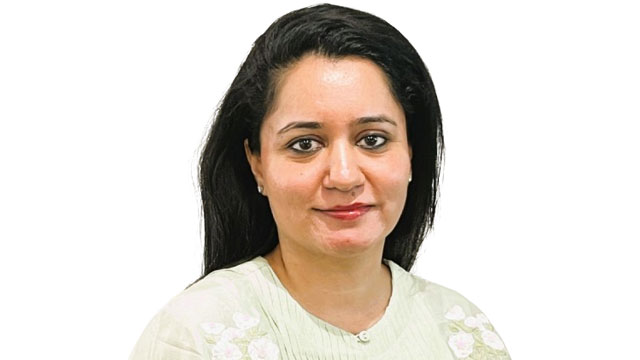
About Anushri Bansal
As the Senior Economist for South Asia, MEI….Anushri leads the development and delivery of differentiated economic, financial, policy and market thought leadership for customers and Mastercard in the region.
Anushri Bansal is a senior economist with the Mastercard Economics Institute, responsible for research and client engagements within Asia Pacific, focussing on the South Asia region. In this capacity, she works with key stakeholders to drive thought leadership, unique measures and insights, and delivers them regularly to clients and to senior leadership across the Mastercard organisation. She is regularly invited as a keynote speaker in conferences and client events.
Anushri has nearly 20 years of work experience spanning across financial markets, consulting and academia. Before joining Mastercard she worked as the lead economist for the India markets in ICICI Bank, advising traders and investors across asset classes on macroeconomic developments and forecasts as well as presenting in the Bank ALCO and to the Board. Anushri graduated with a B.A. (Hons.) in Economics from Lady Shri Ram College, Delhi University and with a MSc. in Economics from London School of Economics, London.
About the Interviewer
Mahima Sharma is an Independent Senior Journalist based in Delhi NCR with a career spanning TV, Print, and Online Journalism since 2005. She has played key roles at several media houses including roles at CNN-News18, ANI, Voice of India, and Hindustan Times.
Founder & Editor of The Think Pot, she is also a recipient of the REX Karmaveer Chakra (Gold & Silver) by iCONGO in association with the United Nations. Since March 2022, she has served as an Entrepreneurship Education Mentor at Women Will, a Google-backed program in collaboration with SHEROES. Mahima can be reached at media@indiastat.com
Disclaimer : The facts & statistics, the work profile details of the protagonist and the opinions appearing in the answers do not reflect the views of Indiastat or the Journalist. Indiastat or the Journalist do not hold any responsibility or liability for the same.
"Deepen Local Bond Markets to Unlock Climate Capital and Reduce Foreign Exchange Risk"... Read more








.png)